Midtown Manhattan First-Time Buyer Guide to Condos and Co-ops
June 11, 2026
June 11, 2026
Buying your first place in Midtown can feel exciting right up until you realize you are not just choosing an apartment. You are also choosing a building type, a monthly cost structure, a closing-cost profile, and a commute pattern that can shape your day-to-day life. If you want a clear, practical guide to Midtown Manhattan condos and co-ops, you are in the right place. Let’s dive in.
Midtown is not one single experience. It is a broad, fast-moving part of Manhattan where transit access and building type often matter just as much as square footage or bedroom count. For many first-time buyers, that means your search works best when you define your budget, commute, and ownership goals before you fall in love with a listing.
StreetEasy’s early June 2026 data shows a median Midtown value of about $1.249 million and a median size of about 1,100 square feet. It also shows a wide gap between condos and co-ops. In Midtown overall, median condo prices sit around $700,000 for studios, $1.045 million for one-bedrooms, and $1.995 million for two-bedrooms, while median co-op prices are about $410,000, $650,000, and $1.2 million.
That price gap is one reason many first-time buyers start with co-ops. But purchase price is only part of the picture. In Midtown, the better value for you depends on your full monthly cost, closing costs, and how much flexibility you want after you buy.
Midtown East often appeals to buyers who want quick access to Grand Central. According to the MTA, Grand Central Terminal connects Metro-North, the Long Island Rail Road through Grand Central Madison, the 42 St-Grand Central subway stop, and multiple bus lines. If your daily routine depends on east-side rail access, this can be a major advantage.
StreetEasy describes Midtown East as including Kips Bay, Murray Hill, Sutton Place, and Turtle Bay. Buyers are often drawn to the area for its convenient commute around Grand Central and nearby office corridors. For a first-time buyer, that can mean a more efficient workweek and easier regional travel.
Midtown West is often the better match if you rely on Penn Station, Port Authority, or west-side subway access. Port Authority notes that the Midtown Bus Terminal sits between 40th and 42nd Streets and 8th and 9th Avenues, with connections to the A/C/E, N/Q/R/W, 1/2/3, and 7 trains, plus the shuttle to Grand Central. Penn Station also serves Amtrak, NJ Transit, and LIRR.
StreetEasy describes Midtown West, often referred to as Hell’s Kitchen or Clinton, as a more affordable alternative to Chelsea with a mix of older walk-ups and major skyscraper development. If you want strong transit links and a neighborhood with a busy daytime-commercial and evening-entertainment rhythm, Midtown West may fit well.
In a condo, you own your apartment unit directly along with an undivided interest in the common elements of the building. New York offering-plan rules require disclosure around common charges, assessments, sale and lease rights, insurance, repairs, and occupancy restrictions. Your unit is also a separate tax lot.
For many first-time buyers, condos feel more straightforward because the ownership structure is more direct. They can also be attractive if you want clearer future sale or leasing rights, subject to the building’s rules. That said, condos in Midtown usually cost more upfront.
In a co-op, you buy shares in a corporation that are tied to your apartment, and you receive a proprietary lease instead of direct real-property ownership of the unit. Co-op owners pay maintenance based on the number of shares allocated to their apartment. The building is governed by bylaws, the proprietary lease, house rules, annual reporting requirements, and sublet provisions.
Co-ops often offer a lower purchase price than condos in Midtown. For a first-time buyer, that lower entry point can make ownership possible sooner. But you also need to be comfortable with the building’s governance structure and rules.
One of the biggest first-time-buyer mistakes is focusing too much on the asking price. In Midtown, two apartments with similar prices can have very different monthly carrying costs. That difference is often tied to whether the property is a condo or co-op and how the building is structured.
Co-op maintenance can include more than building operations. Under New York co-op offering-plan rules, maintenance charges may include debt service on an underlying mortgage, and your own apartment financing is an additional expense on top of that. In plain terms, a lower purchase price does not always mean a lower monthly outlay.
This is why a Midtown co-op can look like a bargain at first glance but still feel expensive month to month. Before you make an offer, you want to look at the full maintenance number and understand what is driving it.
With a condo, your monthly bill is usually split between common charges and separate property taxes. Offering-plan rules require disclosure of projected common charges, which helps buyers compare buildings more clearly. You are also not responsible for other units’ tax liens.
For first-time buyers, condos can be easier to analyze because the costs are more clearly separated. Still, you need to study both line items together. A condo with modest common charges but high property taxes may not be cheaper than a co-op with higher maintenance.
New York City places co-ops and condos in tax class 2 and values them as if they were income-producing properties. The Department of Finance says it uses income and expense data and comparable rentals rather than owner-occupant pricing. For 2026, the class 2 tax rate is 12.439%.
The key takeaway is simple: property taxes are not based on asking price alone. That is why two Midtown apartments with similar sale prices can have very different tax bills. If you are comparing listings, make sure you compare the actual monthly carrying cost, not just the purchase price.
Some qualifying primary-residence developments may receive the NYC co-op and condo abatement. According to NYC 311, the current benefit ranges from 17.5% to 28.1% depending on average assessed value, and the board or managing agent files for the development. Buyers do not apply individually.
This matters because an abatement can reduce the annual tax bill on qualifying units. If you are considering a condo or co-op where taxes seem lower than expected, it is worth confirming whether an abatement is in place and how it affects your monthly cost.
A realistic budget starts with market context. Based on StreetEasy data from early June 2026, Midtown medians look like this:
| Property Type | Studio Median | One-Bedroom Median | Two-Bedroom Median |
|---|---|---|---|
| Condo | $700,000 | $1,045,000 | $1,995,000 |
| Co-op | $410,000 | $650,000 | $1,200,000 |
Within Midtown, neighborhood sections also vary. Midtown East shows condo medians around $650,000 for studios and $895,000 for one-bedrooms, with co-op medians around $400,000 and $649,500. Midtown West shows condo and co-op medians around $708,500 and $1.1 million for studios and one-bedrooms, according to the research provided.
These figures are best used as orientation points, not guarantees of what you will find in a specific building. The real question is how your target price lines up with building rules, monthly costs, and your preferred commute.
Closing costs in New York City can surprise first-time buyers, especially on financed deals. The exact total depends on the contract, your financing, and building-specific fees, but there are several baseline taxes and charges you should expect to review closely.
New York State charges a 1% mansion tax on residential purchases priced at $1 million or more. In Midtown, that threshold is very relevant because many one-bedroom condos and some larger co-ops can cross it. If your budget is close to $1 million, this tax can affect how much cash you want to keep in reserve.
If you finance your purchase, mortgage recording tax can add meaningfully to your buyer closing bill. New York State explains that this tax applies to recorded mortgages, with state and local components in New York City. That means financed purchases can cost noticeably more to close than all-cash purchases.
NYC real property transfer tax is 1% when value is $500,000 or less and 1.425% above that, and by default the seller pays the base tax unless the contract says otherwise. New York State’s transfer tax is 0.4%. The research also notes that certain higher-value NYC conveyances can trigger additional state transfer-tax layers.
Even when a tax is usually paid by the seller, first-time buyers should still understand the full tax picture. It helps you read deal terms more carefully and avoid assumptions about who is covering what.
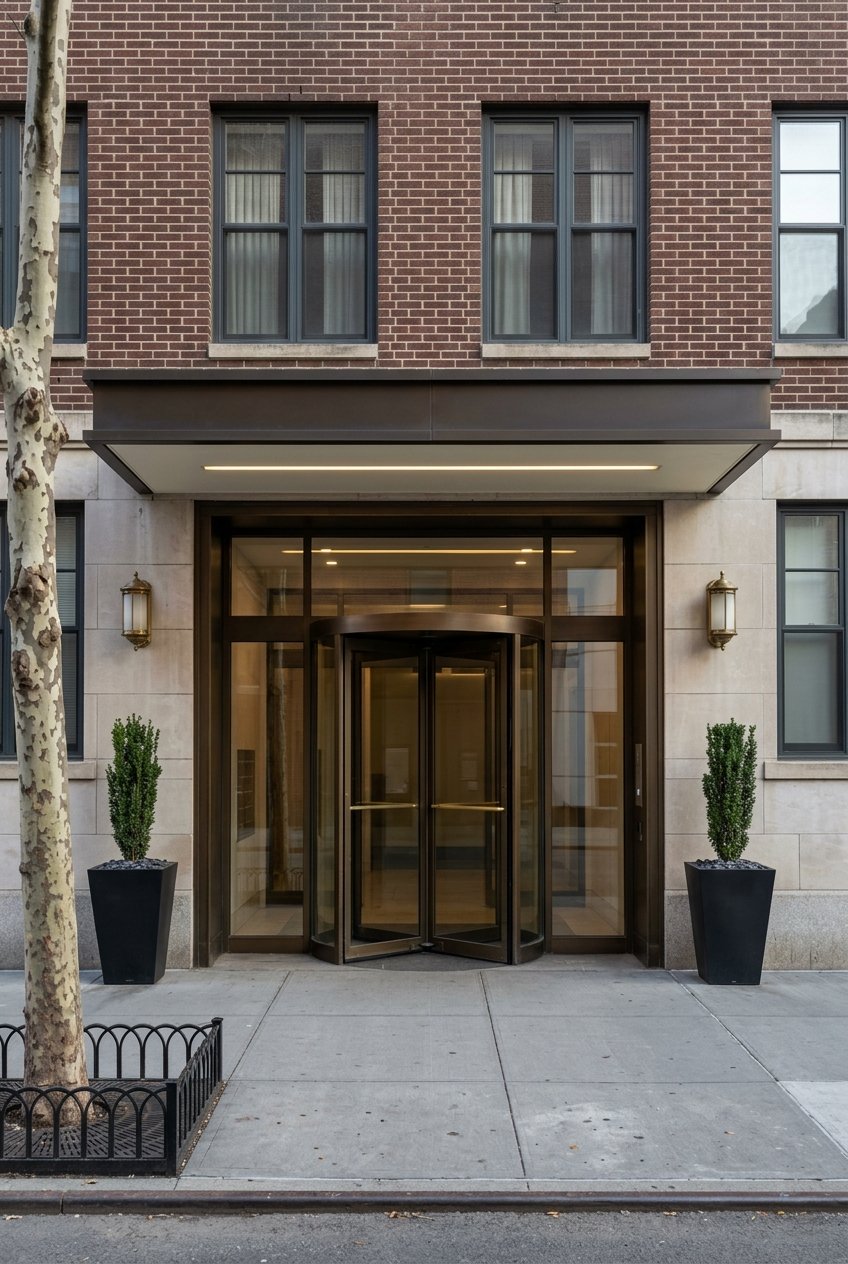
A polished lobby can make a strong first impression, but Midtown buyers need to look deeper. The New York Attorney General recommends reading the entire offering plan and consulting an attorney before signing a purchase agreement. For existing buildings and conversions, the offering plan should disclose known or visible defects, and buyers should not rely on marketing materials alone.
The AG also recommends reviewing board minutes and financial reports. Those records can reveal costly building issues involving the facade, roof, elevators, plumbing, boiler, or electrical systems. In a first purchase, this review can be one of the best ways to avoid surprises after closing.
Your checklist should include both the apartment and the building as a whole. The AG specifically names these items for review:
For condos, review common charges, reserves, insurance, repairs, and sale or lease rights. For co-ops, pay close attention to the bylaws, proprietary lease, house rules, annual reports, and sublet provisions.
Midtown purchases move more smoothly when you have the right professionals in place early. The research supports using an NYC attorney who regularly handles co-op and condo closings, especially because the Attorney General repeatedly advises buyers to use counsel and review offering-plan materials carefully.
You should also work with a lender familiar with board-document underwriting if you plan to finance. In practice, that can make a difference in how smoothly your application moves through the process. A well-coordinated team helps keep the experience calm, organized, and easier to manage.
At PS New York Real Estate, our approach is built around exactly that kind of guidance. We focus on making complex Manhattan purchases feel clear and manageable, with responsive communication and close coordination across attorneys, lenders, and building management so you always know your next step.
If you are choosing between a Midtown condo and co-op, start with four questions:
When you answer those questions honestly, your options usually narrow quickly. The best first home in Midtown is not just the one you can buy. It is the one you can comfortably own, understand, and enjoy.
If you want calm, hands-on guidance as you compare Midtown condos and co-ops, connect with PS New York Real Estate for a clear next-step plan tailored to your budget, commute, and long-term goals.
Stay up to date on the latest real estate trends.



We deliver seamless real estate experiences, matching clients with Manhattan’s finest properties while balancing lifestyle, budget, and investment goals.
PS New York Real Estate

PETER MCLEAN
[email protected]
(646) 801-3244
License #10401318818
SONIA COZZI
[email protected]
(917) 916-7040
License #10401382795
ADDRESS 157 COLUMBUS AVE RM 2W NEW YORK NY 10023