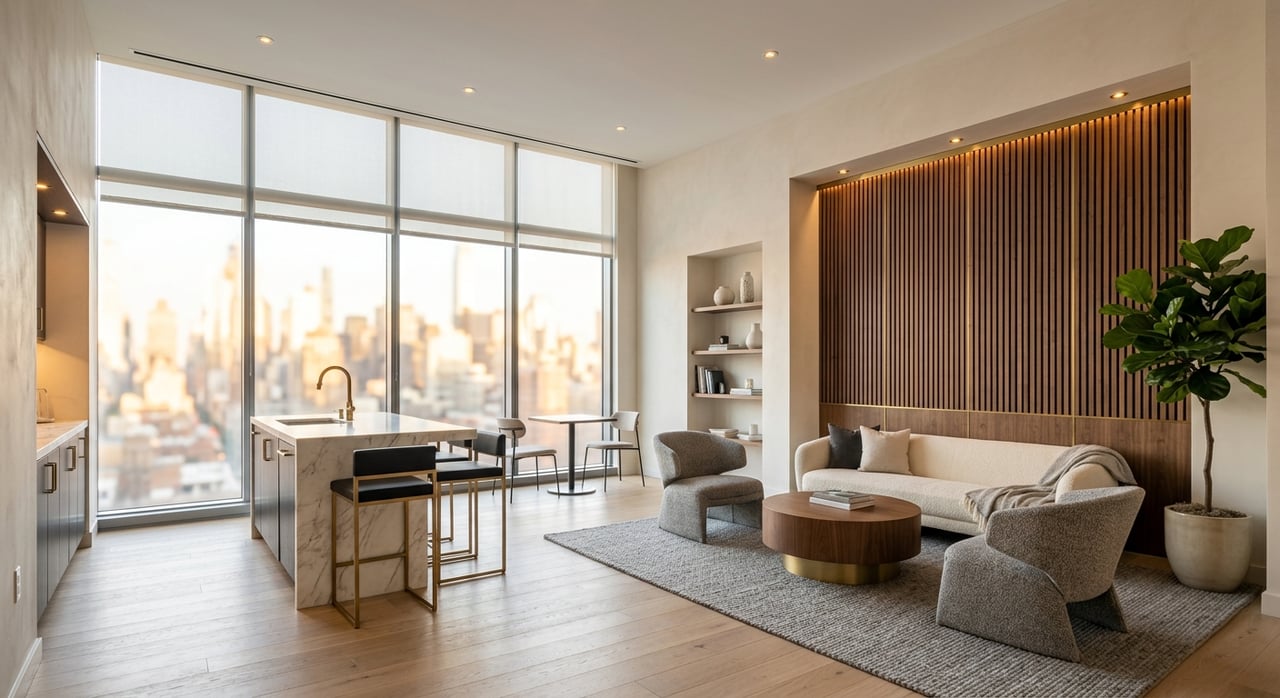
High-Rise Condo Living In Midtown Manhattan: A Daily Life Overview
March 26, 2026
March 26, 2026
What does a typical day feel like when you live 40 floors up in the center of Manhattan? If you’re weighing a Midtown high-rise, you’re likely balancing big views, unmatched transit access, and a fast, convenience-first lifestyle. In this guide, you’ll see what daily life really looks like, from morning routines and commutes to amenities, errands, and evenings out, plus smart tips for choosing the right building. Let’s dive in.
Midtown is Manhattan’s commercial heart, most commonly described as the band from roughly 34th Street to 59th Street. It overlaps with local planning areas like Manhattan Community District 5. For context on boundaries and governance, review the Community Board documentation for District Five’s jurisdiction and activities in the area at the CB5 bylaws and district description. For a broad overview of Midtown’s role and typical boundaries, see the Midtown Manhattan overview.
The daytime energy is high. You share sidewalks with office workers, hotel guests, theatergoers, and shoppers, which gives Midtown a fast tempo and service-dense feel. That mix also makes many corridors highly walkable with quick access to food, transit, and daily services. The tradeoff is that some blocks are busier and louder than quieter residential neighborhoods further uptown or downtown.
You’ll see a wide range of buildings in Midtown. Many buyers target full-service luxury condominium towers with glass facades, hotel-style amenities, and attentive front-desk staff. Media coverage of recent sales activity shows how new developments and amenity-rich buildings continue to draw attention, as seen in CityRealty’s roundup of top-selling buildings.
You’ll also find postwar and modern rental high-rises, condo conversions from hotels or offices, and prewar or midcentury co-ops that may offer fewer flashy amenities but often have classic layouts and, in some cases, lower monthly charges. In recent years, new luxury towers have leaned into larger amenity footprints to compete for buyers. Reporting highlights expanded “club level” setups with fitness, wellness, co-working, and lounges, which can influence common charges and expectations. For context on amenity trends, see industry coverage in The Real Deal’s report on Manhattan’s luxury market.
As you compare options, confirm the building’s ownership type. Condos often allow faster closings and more flexible financing, which many out-of-town buyers value. Co-ops commonly require board packages and interviews, and they may have stricter subletting rules. Policies vary by building, so ask early and in writing.
One of the biggest rewards of high-rise living is the view. Depending on location and exposure, you might wake to the Hudson River, East River, or Central Park edge, with a changing skyline as your backdrop. Higher floors tend to offer wider vistas and can feel quieter than the street below. Large windows and high ceilings are frequent selling points in newer towers.
Elevator service becomes part of your routine. Many tall buildings use a mix of express and local banks, which helps with traffic at peak hours. When you tour, pay attention to elevator wait times and how move-ins or deliveries are scheduled, since those can affect day-to-day convenience.
If commuting is a priority, Midtown’s connectivity is a standout advantage. The neighborhood sits between the region’s two major rail anchors: Penn Station and Moynihan Train Hall on the west side and Grand Central Terminal on the east.
Subway coverage is dense across 34th, 42nd, and 59th Streets, which makes crosstown and cross-borough trips practical. With regional rail, buses, ferries, and subways in reach, many professionals find door-to-door commutes can run about 10 to 40 minutes depending on route and time of day. If you rely on a specific mode, choose a building that sits close to your transit spine.
Midtown shines for everyday convenience. You’ll find delis, quick-service spots, and hotel dining for lunch. Many corridors have full grocery anchors, specialty markets, and abundant services like dry cleaners, pharmacies, and shipping centers. Proximity to transit hubs usually means longer hours and plenty of options within a few blocks, which makes it easy to handle errands between meetings or on your way home.
Evenings in Midtown offer variety. You have Broadway and the Theater District, plus major cultural anchors and public spaces such as Bryant Park, Rockefeller Center, and the MoMA area. Some pockets, especially around Times Square, remain busy late into the night with a strong tourist presence. Public filings and planning appendices have referenced very high pedestrian counts in this area, which shape the feel of nearby blocks. For more on activity levels, review the Times Square footfall context in this SEC-filed document referencing Times Square data.
If you prefer calmer nights, consider towers that sit a few blocks off the most touristed corridors, or aim for higher floors and modern window systems to buffer street noise.
Most full-service Midtown condos share a similar amenity backbone:
Newer buildings often go bigger on amenities to compete, sometimes dedicating multiple floors to a “club level.” That can boost value and convenience, though it may also raise common charges. Always confirm what’s included versus what requires a separate membership, along with hours and guest policies. For perspective on how amenity sets are evolving in the luxury segment, see The Real Deal’s market coverage.
Use this checklist to compare buildings and units side by side:
You deserve a Midtown home that supports your routine, budget, and long-term goals. Our team’s approach is simple. We match your commute and lifestyle to the right building type, help you compare amenity value against monthly costs, and guide you through condo versus co-op processes with clear timelines. We coordinate with your lender, attorney, and building management so you stay ahead of each step, from offer through closing or lease execution.
Ready to see how Midtown high-rise living works for you? Reach out to schedule a consult with PS New York Real Estate. We’ll tailor a short list of buildings to tour, map your best transit options, and help you move forward with confidence.
Stay up to date on the latest real estate trends.



We deliver seamless real estate experiences, matching clients with Manhattan’s finest properties while balancing lifestyle, budget, and investment goals.
PS New York Real Estate

PETER MCLEAN
[email protected]
(646) 801-3244
License #10401318818
SONIA COZZI
[email protected]
(917) 916-7040
License #10401382795
ADDRESS 157 COLUMBUS AVE RM 2W NEW YORK NY 10023