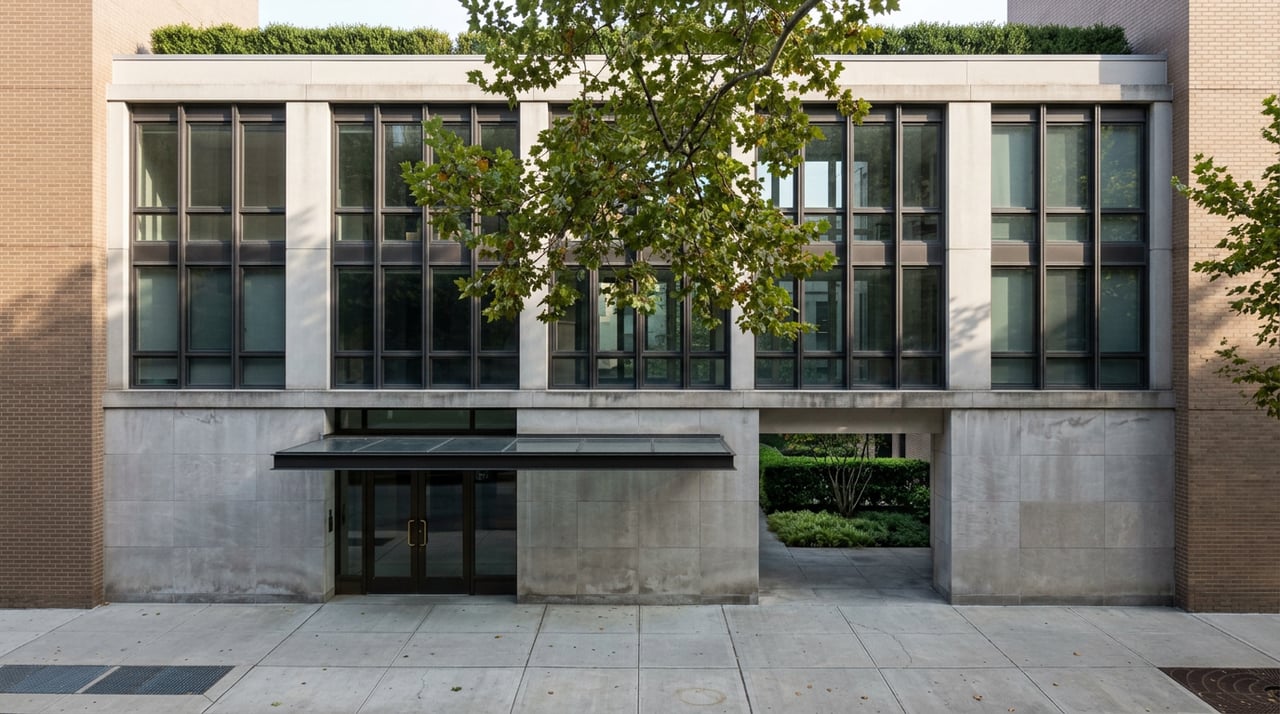
The Hell's Kitchen Tax Abatement Clock Every Condo Buyer Should Check First
September 24, 2026
September 24, 2026
Two condos on West 49th Street in Hell's Kitchen can carry almost identical asking prices, nearly identical square footage, and completely different real costs of ownership. The difference has nothing to do with the kitchen finishes or the floor. It comes down to where each building sits on its 421-a tax abatement clock, and that clock rarely shows up anywhere a buyer thinks to look until an attorney or an accountant points it out mid-contract.
This matters right now because Hell's Kitchen happens to be sitting on both ends of that clock at once. One well-known building in the neighborhood is watching its abatement wind down. A short walk away, a project that broke ground years later locked in benefits that will outlast it by decades. Same neighborhood, same tax program, wildly different math.
540West, the glass and steel condominium that spans the block between West 48th and West 49th Streets, was completed in 2015 by Fortis Property Group. The building carries a 421-a tax abatement that was granted at launch, and depending on which listing you read, that abatement is described as ending at different times. Both versions show up on active, professionally maintained listing pages for the same building right now.
That is not a typo worth dismissing. It is the whole lesson. If two experienced sources publishing current listings for the same address report different end dates for when a building's tax benefit runs out, a buyer relying on either number without independent verification is making a six-figure assumption on secondhand information.
A few blocks away, a very different clock is running. A residential project at 250 West 49th Street, developed by Chess Builders after a site that spent years cycling through hotel and office plans before landing on residential in 2022, fully vested under the 421-a program before it closed to new applicants. According to Multi-Housing News, the project will carry a 35-year tax abatement. Construction topped out in the summer of 2025, and a housing lottery for units there ran through July 2026. That project is a rental building, not condos for sale, but it shows something important about timing: the same block, the same tax program, and one building that got in years earlier than the other under terms of the program that no longer exist.
A 421-a abatement rarely disappears in one step. CondosCoopsNYC reports that most schedules phase the exemption out over four to eight years once the phase-out period begins, typically stepping up in increments, such as an owner paying twenty percent of the full tax bill in the first year of phase-out, forty percent in the second, sixty in the third, and so on until the full bill applies. It is a ramp, not a cliff, which is exactly why it can catch buyers off guard. The tax line on a listing sheet looks stable right up until the year it starts climbing.
Citywide analyses of these phase-outs give a sense of the scale. A typical one-bedroom owner paying around $267 a month in abated taxes can see that bill rise past $1,183 a month once the phase-out runs its course, an increase near $11,000 a year. In a larger or higher-value unit, the annual swing can top $25,000. Those are general figures drawn from citywide condo tax data, not a claim about any single Hell's Kitchen address, but they show why the difference between "abatement active" and "abatement in year six of an eight-year phase-out" is worth real money to a buyer's carrying cost math.
Here is the part that changes how a Hell's Kitchen buyer should think about this. Skybriz reports that the 421-a program closed to new applicants in June 2022. Its replacement, known as 485-x, was enacted in the 2024 state budget, but according to NYC HPD, it was built around rental housing and largely excludes new Manhattan condominiums. That means every Hell's Kitchen condo currently advertising an active 421-a benefit locked it in under a program that no longer exists and cannot be renewed or extended for a future building.
In practical terms, the supply of abated condo units in the neighborhood is fixed. It will only shrink as more buildings work through their phase-out schedules, the way 540West is doing now. A newer-looking building is not automatically further from the end of its benefit than an older one.
| Building | Type | 421-a status | What it means for a 2026 buyer |
|---|---|---|---|
| 540West, 540 West 49th Street | Condo, completed 2015 | Granted at launch; listing sources show different end dates | Confirm the exact certificate date and remaining phase-out years directly rather than relying on either published figure |
| 250 West 49th Street | Rental, topped out 2025 | Fully vested under the now-closed 421-a program; carries a 35-year abatement | Not a condo purchase, but proof that timing of the filing, not the building's age, determines how much runway an abatement has left |
Buyers who compare two Hell's Kitchen condos by looking at the monthly tax figure on each listing are often comparing two different points on two different timelines, not two comparable costs. A unit with eighteen years of abatement left and a unit with two years left can show the same current tax bill and represent completely different financial outcomes five years out.
This has a measurable effect on pricing, too. One widely cited analysis from the NYC Independent Budget Office found that Manhattan condo buyers pay roughly 0.43 percent of the sale price for each additional year of 421-a benefit remaining on a unit. That means the number of years left on the clock is not just a future cost question. It is already baked into what you are paying today, whether or not the listing spells that out.
A few steps turn this from a guessing game into a documented fact, and none of them require anything beyond public records and a request through your attorney.
None of this is a reason to avoid a building with an abatement. It is a reason to know precisely where that building sits on its own timeline before the number on the listing sheet becomes the number in your mailbox.
This is background to help you ask sharper questions, not tax or legal advice. Abatement schedules, program versions, and phase-out math vary by building and by certificate, and the only way to know a specific unit's exact numbers is to pull the record and read the offering plan. A real estate attorney should always confirm the schedule before you sign.
If 421-a is closed to new buildings, is there any other way a brand-new Hell's Kitchen condo could carry a tax benefit? Its replacement, 485-x, exists, but it was written primarily around rental construction rather than condominiums, so new condo buildings in the neighborhood generally are not receiving a comparable abatement going forward.
Can I find a building's abatement schedule before I even schedule a showing? The NYC Department of Finance's public property tax lookup will show whether a benefit is active and often the general timeline, which is enough to know whether the question is worth raising before you tour.
If you are weighing two Hell's Kitchen condos and want the actual abatement math run on each one before you write an offer, that is exactly the kind of groundwork PS New York Real Estate does before a client ever sees a contract. And if you own a unit in a building whose abatement is heading into phase-out and you are wondering what that means for a sale timeline, ask us for a Free Home Valuation so you can see the numbers with the full picture, not just the current tax line.
Stay up to date on the latest real estate trends.




We deliver seamless real estate experiences, matching clients with Manhattan’s finest properties while balancing lifestyle, budget, and investment goals.
PS New York Real Estate

PETER MCLEAN
[email protected]
(646) 801-3244
License #10401318818
SONIA COZZI
[email protected]
(917) 916-7040
License #10401382795
ADDRESS 157 COLUMBUS AVE RM 2W NEW YORK NY 10023